
ZoogVPN speed test: the numbers, and the line they came from
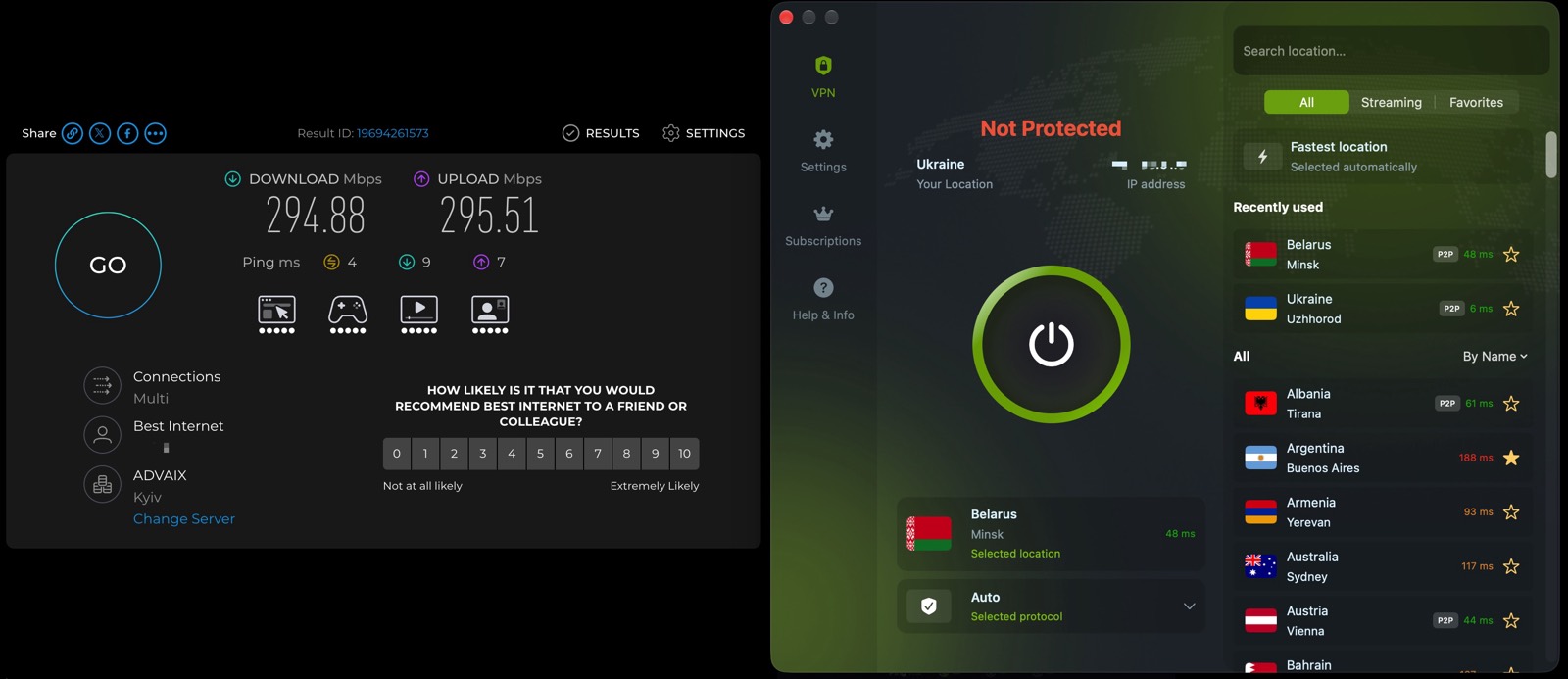
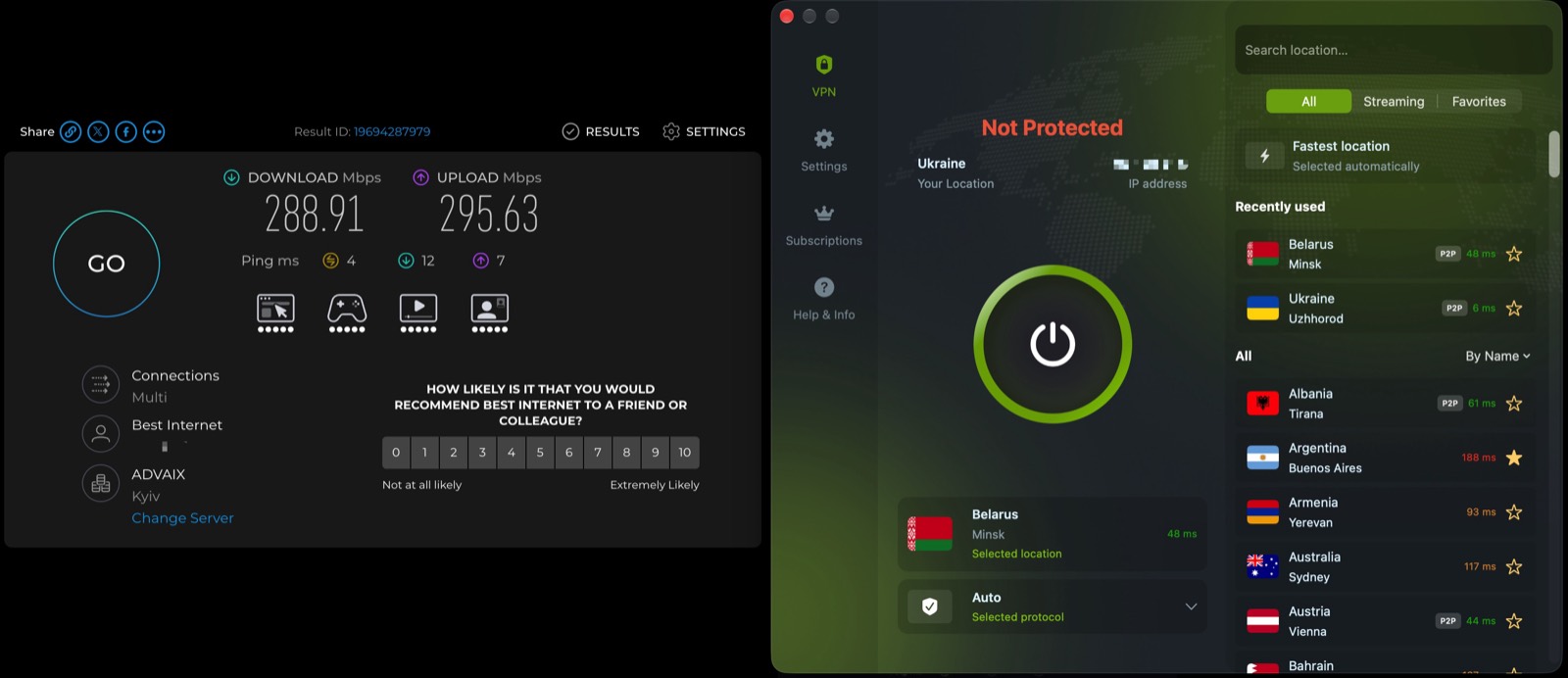
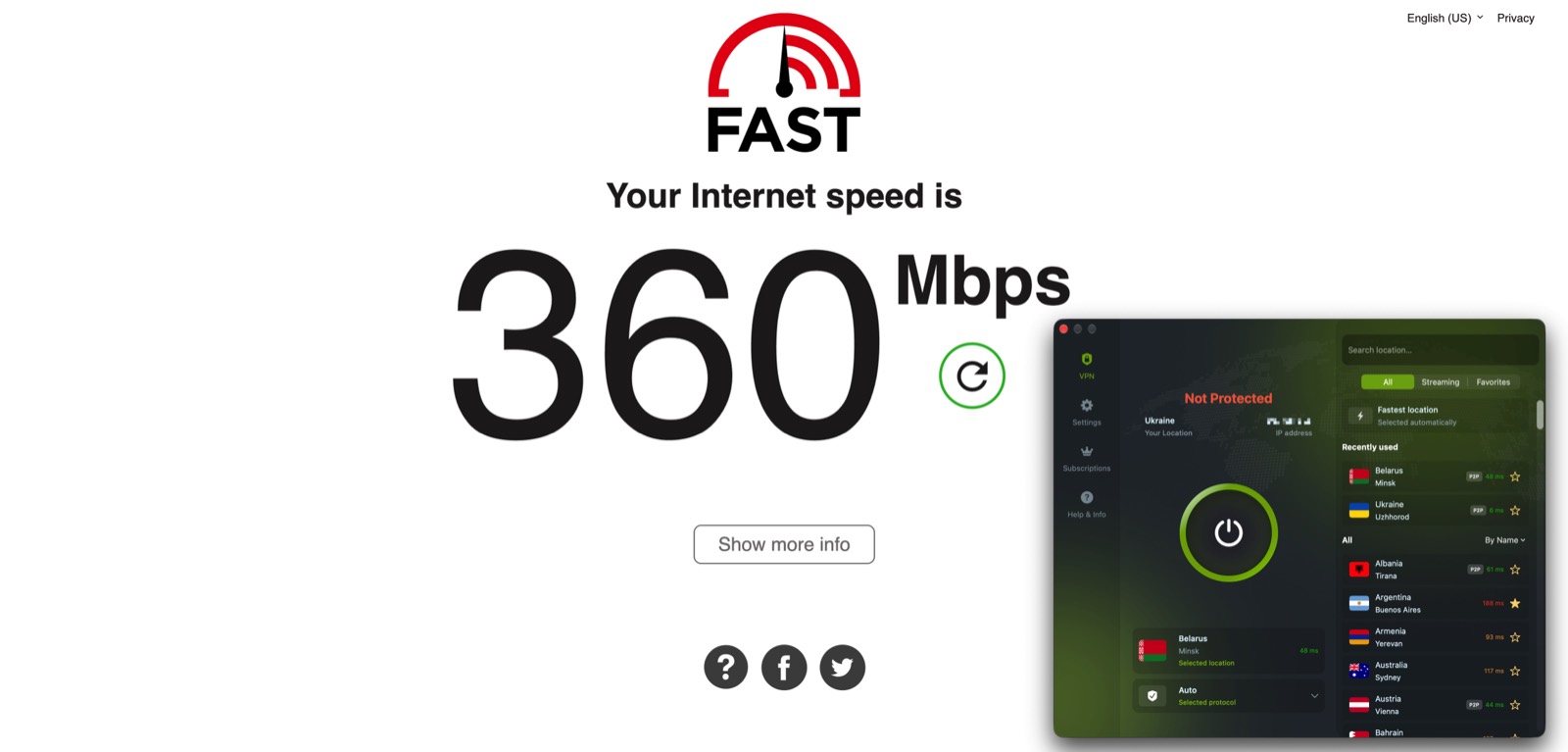
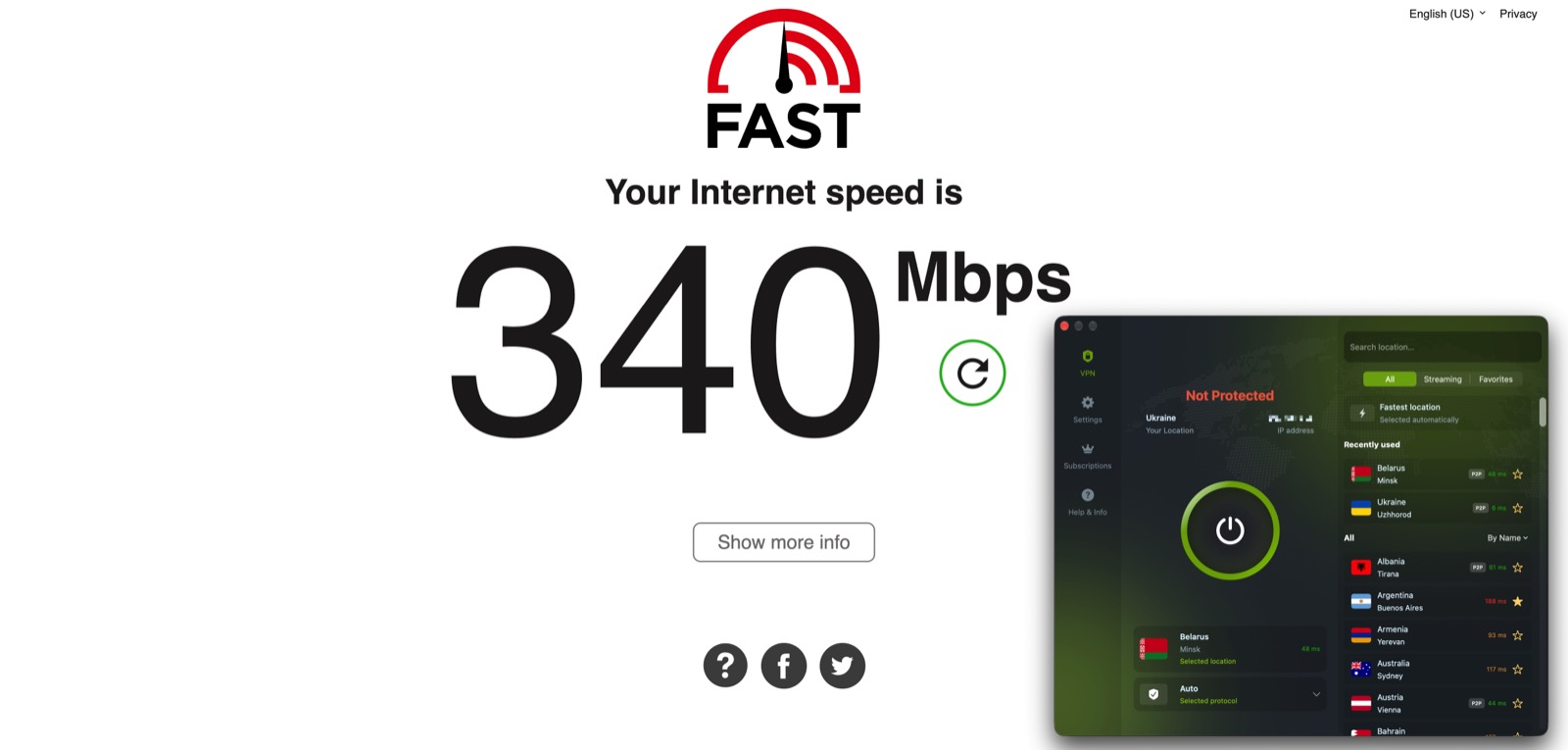
A VPN speed number without a baseline is decoration. So we measured the bare connection twice on each tool before connecting to anything — 294.88 and 288.91 Mbit on Ookla, 360 and 340 Mbit on FAST.com — and only then started testing servers. Everything below is a subtraction from those numbers, not a comparison against someone's marketing page.
The baseline, measured twice
Two runs per tool, minutes apart, on the same fibre line with the VPN client visibly showing Not Protected. This matters for a reason most reviews skip: the line's own run-to-run variance is ±3 Mbit on Ookla and about 20 Mbit on FAST.com. Any "VPN penalty" smaller than that is noise, and we will say so when we hit one.
Connected: Vienna and New York on WireGuard
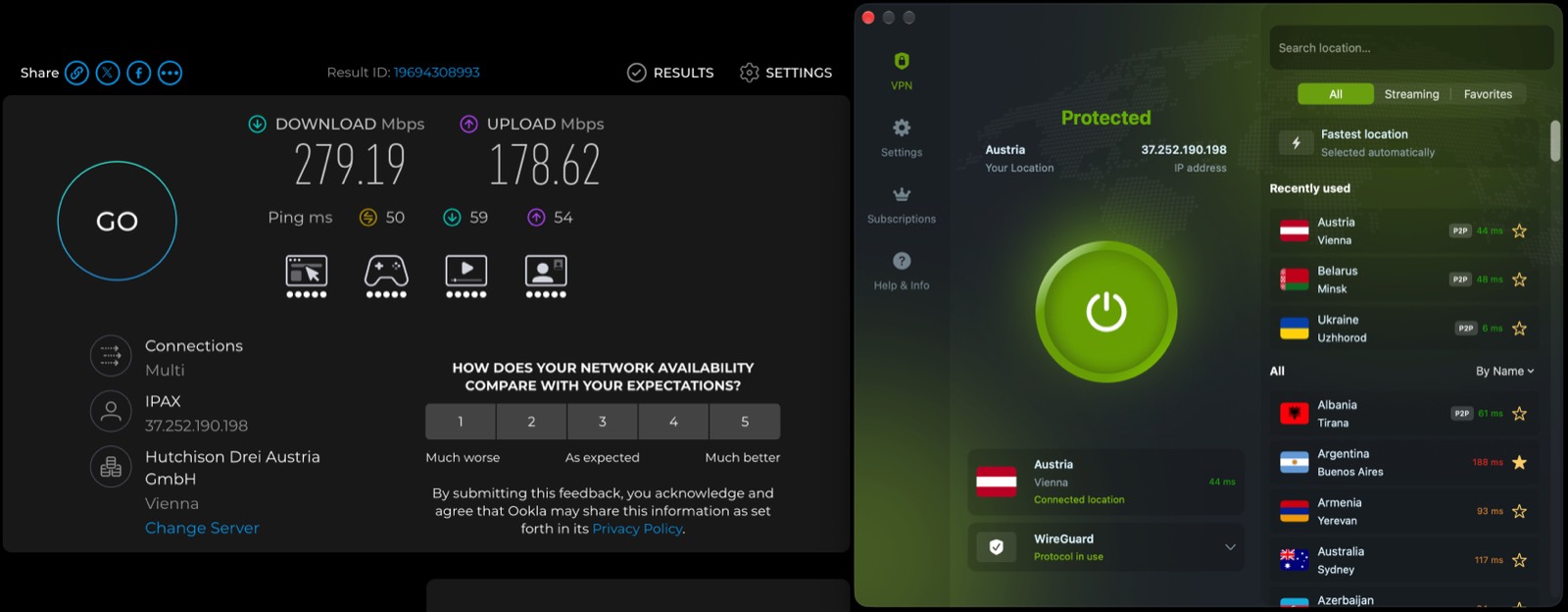
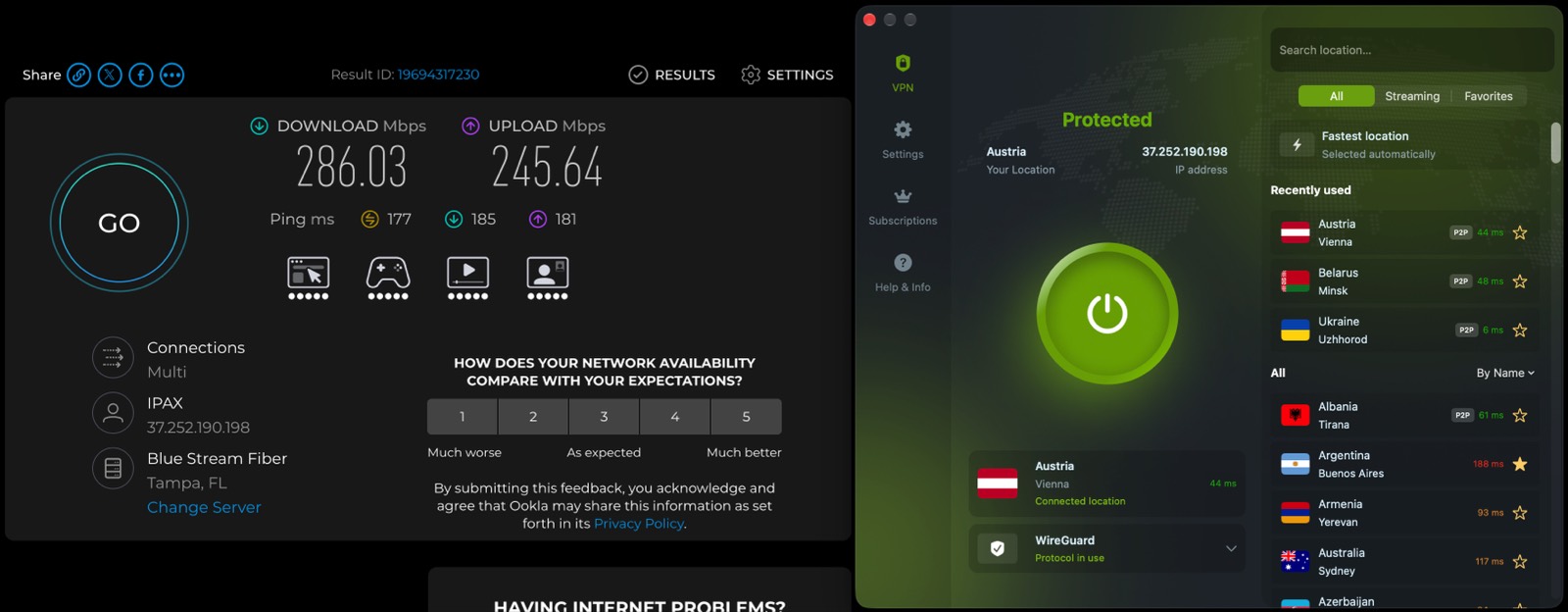
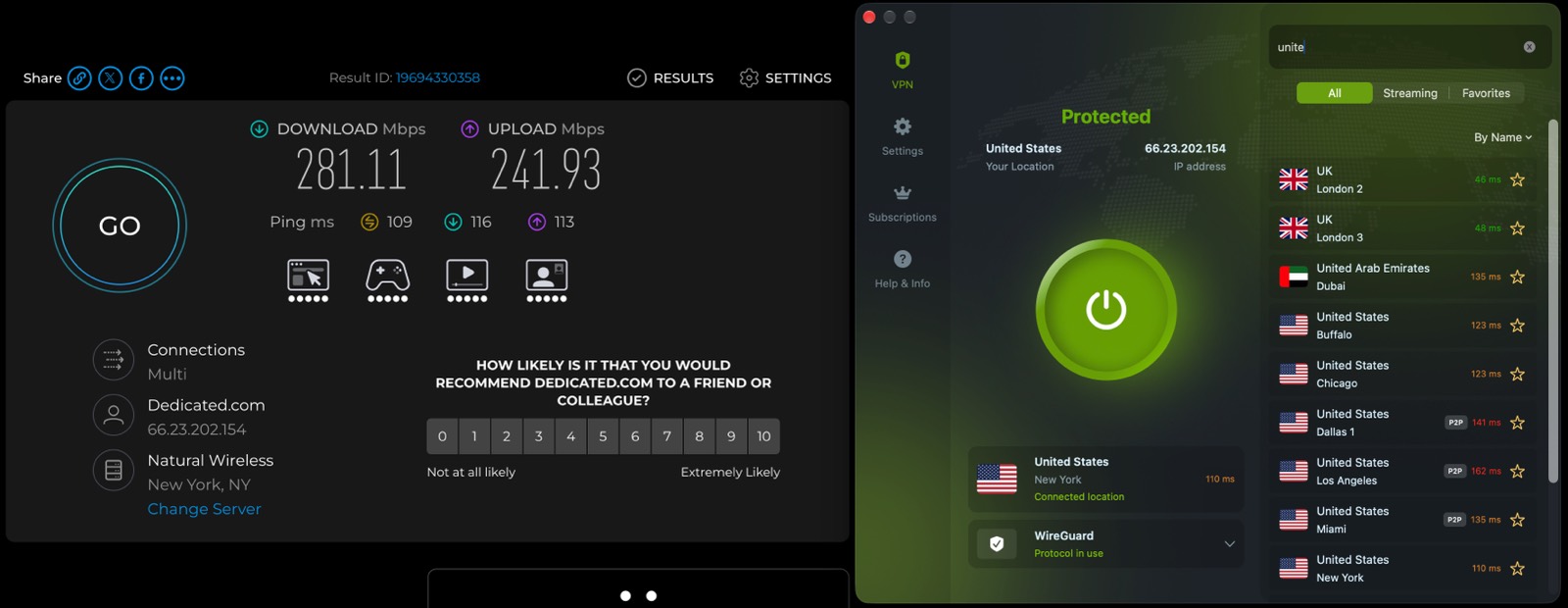
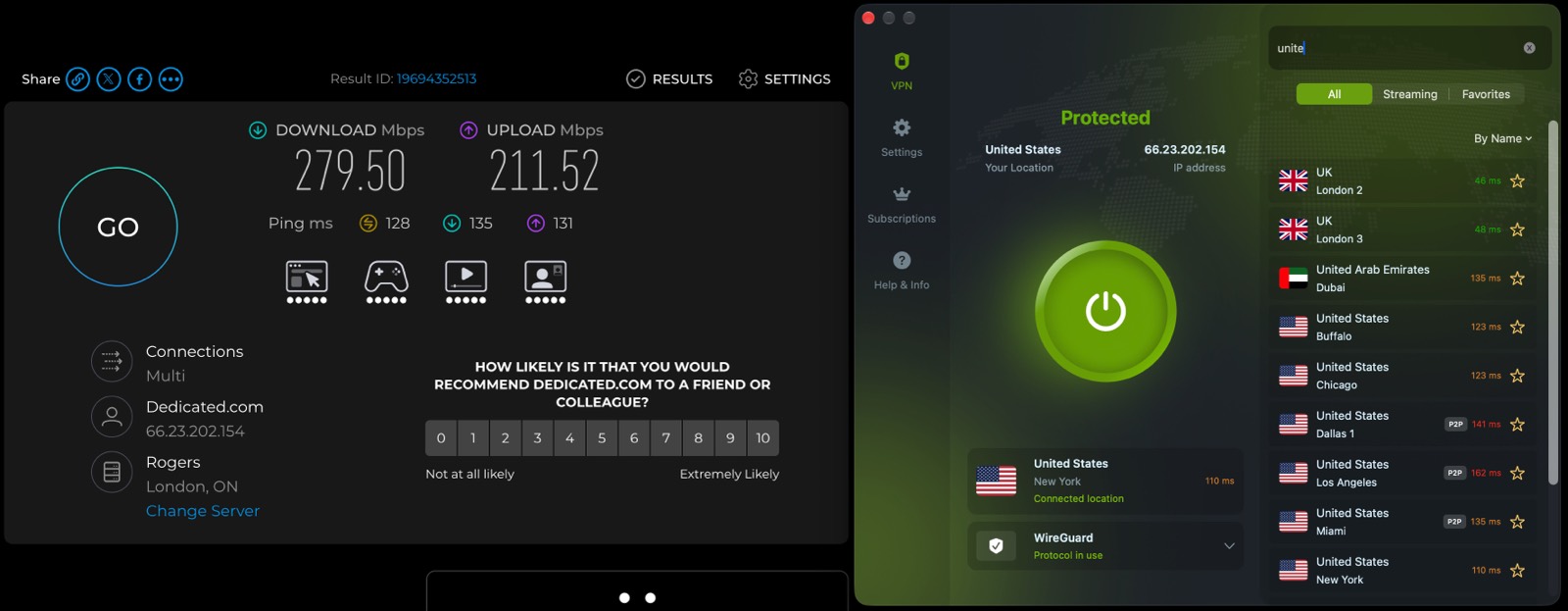
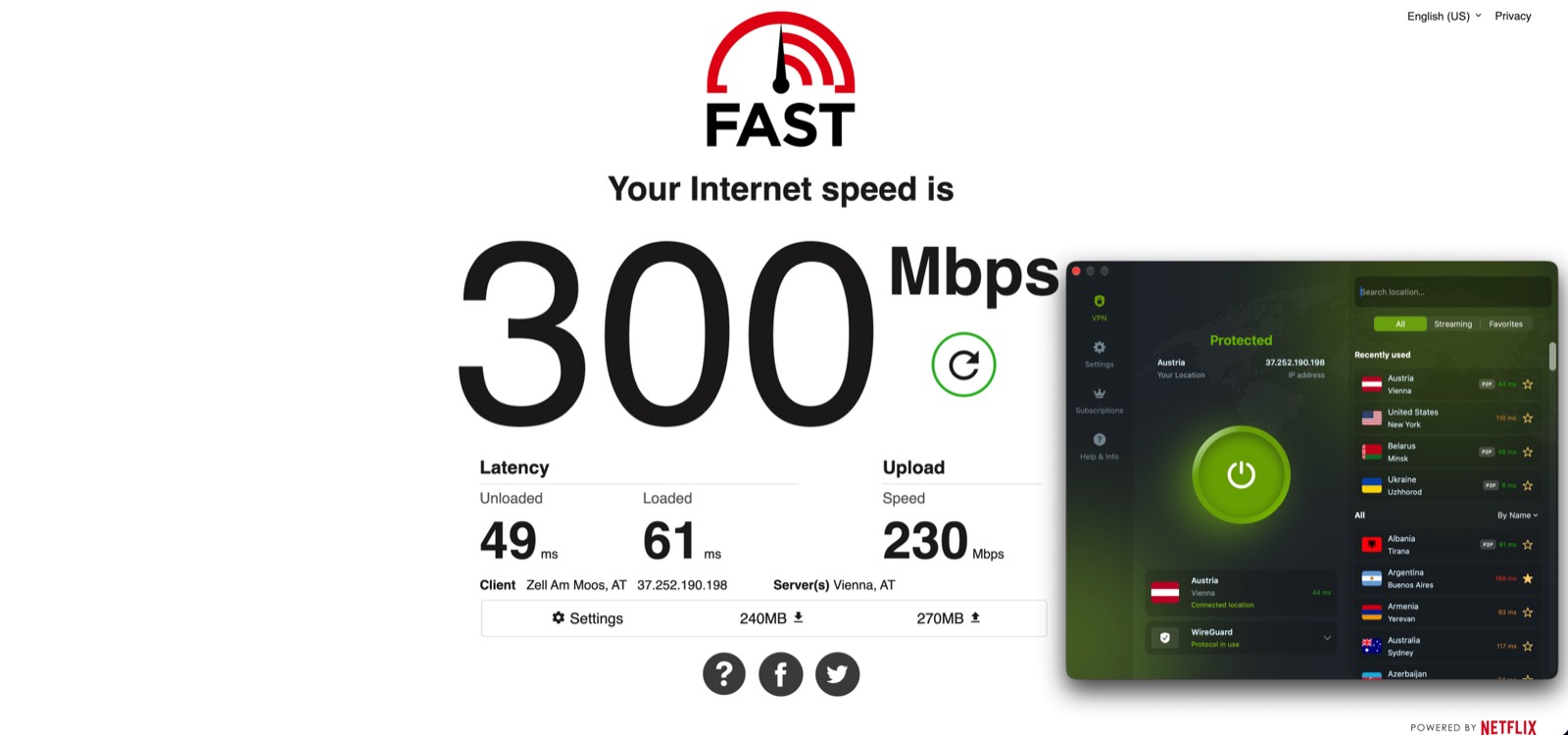
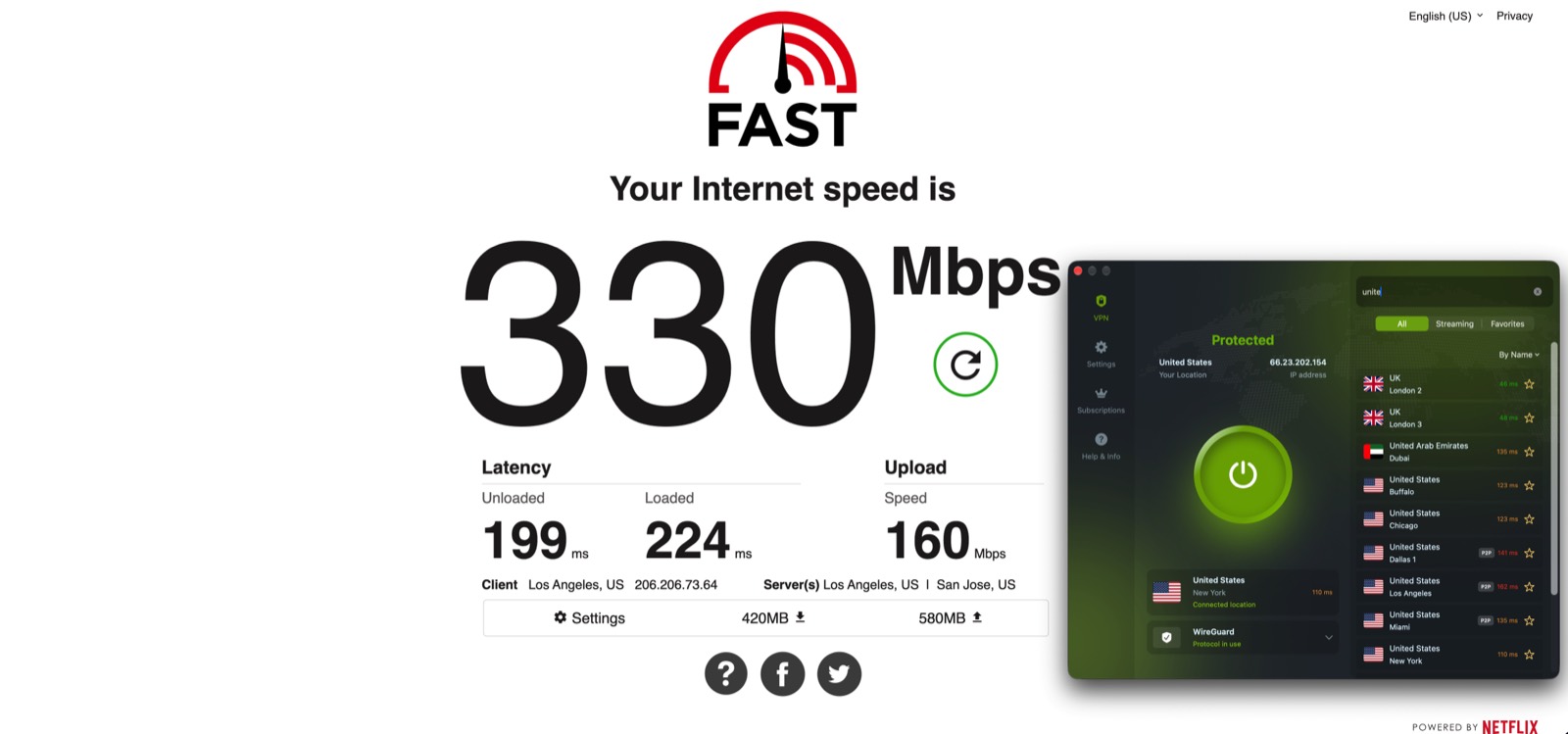
Two exits, one near and one transatlantic, on WireGuard — the fastest protocol ZoogVPN offers and a Premium feature on the desktop clients. Each screenshot has the client window beside the result, so the selected country, the protocol and the exit IP are all verifiable in the same frame as the number.
What the numbers actually say
Download is effectively unaffected. 279–286 Mbit through a tunnel against a 291.9 Mbit average baseline is a 4–5% loss — smaller than the variation between two unprotected runs of FAST.com on the same line. On a 300 Mbit connection you would not notice it. We are not going to claim more than that, because the data does not support more than that: this is one line, one protocol, two servers.
Upload is where the tunnel shows. 178.62 Mbit on the nearby Vienna server against a 295 Mbit baseline is a 40% drop, and it is the one unflattering number in this whole test session. The odd part is that the long-distance runs did better — 245.64 Mbit to Florida, 241.93 Mbit to New York — which points at the test-server pairing rather than at ZoogVPN. We are publishing it either way, and we would rather flag it as unexplained than quietly leave it out.
Latency behaves exactly as geography demands. 4 ms direct, 50 ms to Vienna, 109–128 ms on a US exit, 177 ms Vienna-to-Florida. No anomaly, no sign of an extra hop. Under load, FAST.com measured bufferbloat of 12 ms on the European server and 25 ms on the American one — low enough for video calls through the European exit.
Two things not to read into these numbers
- The "US to Europe" result is not one. Ookla picked London in Ontario, Canada. We label it US→Canada, and there is no transatlantic-from-US measurement in this session.
- FAST.com and Ookla are not interchangeable. FAST reads 340–360 Mbit where Ookla reads 289–295 on the same unprotected line. Compare like with like, or you will invent a 50 Mbit VPN penalty that does not exist.
- Only WireGuard was measured. Nothing here tells you what IKEv2, OpenVPN or Shadow cost in throughput — and Shadow, being an obfuscation layer, should be expected to cost more.